Links
About
- • About MSIT
- • Vision & Mission
- • History
- • Facilities
- • Administration
- • Governing Body
- • From The Desk
Departments
- • CSE
- • IT
- • ECE
- • EEE
- • Applied Sciences
Student Section
- • Time Table
- • Attendance
- • Syllabus
- • NPTEL Videos
- • Student Societies
- • Grievances
- • Higher Studies
Committees
Electronics and Communication Engineering (NBA Accredited)
The Department of Electronics & Communication Engineering which has a fine blend of experienced as well as young and dynamic personalities as faculty, is involved in providing quality education at Undergraduate (UG) level. They have an unceasing commitment towards students, helping them learn, grow, and develop and achieve their goals, whether it is becoming a professor, an entrepreneur, or joining industry. The research interests of the faculty members encompass a wide gamut of sub-disciplines of Electronics & Communication Engineering. Collaboration with faculty members from other disciplines, both within and outside the institute, is encouraged. The lab facilities and the infrastructure are regularly upgraded and are well supported by the institute and the industry.
VISION
ECE department strives to become a centre of quality education to meet the global technological needs for the benefit of mankind.
MISSION
M1: To impart high quality education in the field of electronics & communication engineering to meet the national and global challenges.
M2: To provide adequate facilities, infrastructure and environment to the students as well as faculty members thereby creating an ambience conducive for teaching-learning process.
M3: To empower the students by enhancing their soft skills and ethics to create social awareness and imbibe national values so as to become good citizen.
M4: Creating a thrust for life-long learning through interaction with outside world on contemporary issues and technological trends.
PROGRAM EDUCATIONAL OBJECTIVEs (PEOs)
PEO1 : To prepare ECE graduates with strong foundation in engineering and technology for personal and professional growth.
PEO2 : To prepare ECE graduates with capability of serving and leading various organizations with acquired technical skills and knowledge.
PEO3 : To prepare ECE graduates with professional competence to successfully attempt various competitive exams, pursue higher studies, research and other professional activities.
PEO4 : To prepare ECE graduates with ability to address the challenging needs of society with ethics and integrity in global context.
PROGRAM OUTCOMEs (POs)
Engineering Graduates will be able to:
- Engineering knowledge: Apply the knowledge of mathematics, science, engineering fundamentals, and an engineering specialization to the solution of complex engineering problems.
- Problem analysis: Identify, formulate, review research literature, and analyze complex engineering problems reaching substantiated conclusions using first principles of mathematics, natural sciences, and engineering sciences.
- Design/development of solutions: Design solutions for complex engineering problems and design system components or processes that meet the specified needs with appropriate consideration for the public health and safety, and the cultural, societal, and environmental considerations.
- Conduct investigations of complex problems: Use research-based knowledge and research methods including design of experiments, analysis and interpretation of data, and synthesis of the information to provide valid conclusions.
- Modern tool usage: Create, select, and apply appropriate techniques, resources, and modern engineering and IT tools including prediction and modeling to complex engineering activities with an understanding of the limitations.
- The engineer and society: Apply reasoning informed by the contextual knowledge to assess societal, health, safety, legal and cultural issues and the consequent responsibilities relevant to the professional engineering practice.
- Environment and sustainability: Understand the impact of the professional engineering solutions in societal and environmental contexts, and demonstrate the knowledge of, and need for sustainable development.
- Ethics: Apply ethical principles and commit to professional ethics and responsibilities and norms of the engineering practice.
- Individual and team work: Function effectively as an individual, and as a member or leader indiverse teams, and in multidisciplinary settings.
- Communication: Communicate effectively on complex engineering activities with the engineering community and with society at large, such as, being able to comprehend and write effective reports and design documentation, make effective presentations, and give and receive clear instructions.
- Project management and finance: Demonstrate knowledge and understanding of the engineering and management principles and apply these to one’s own work, as a member and leader in a team, to manage projects and in multidisciplinary environments.
- Life-long learning: Recognize the need for, and have the preparation and ability to engage in independent and life-long learning in the broadest context of technological change.
Program Specific Outcomes (PSOs)
- Apply fundamentals of basic sciences and Electronics& Communication Engineering to develop core and multidisciplinary technology for industrial and societal needs.
- Apply the acquired technical knowledge for successful professional career in the field of Electronics & Communication Engineering and qualifying in various competitive examinations held at national and international level.
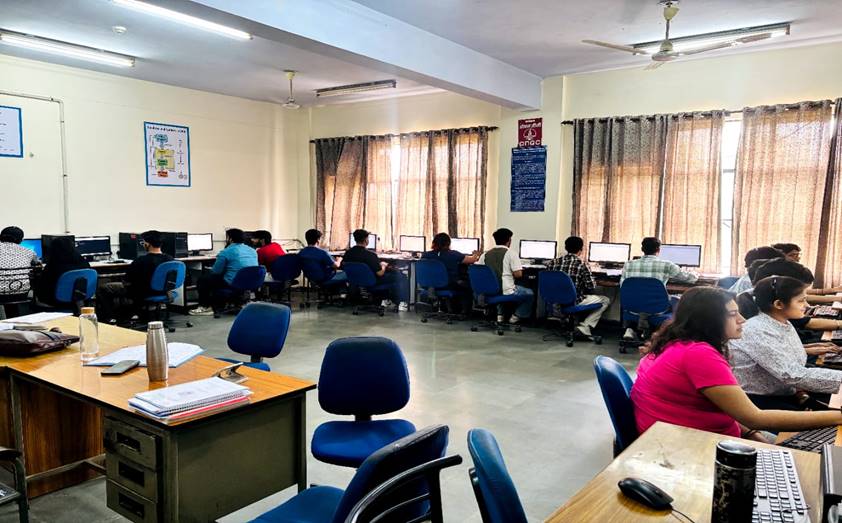
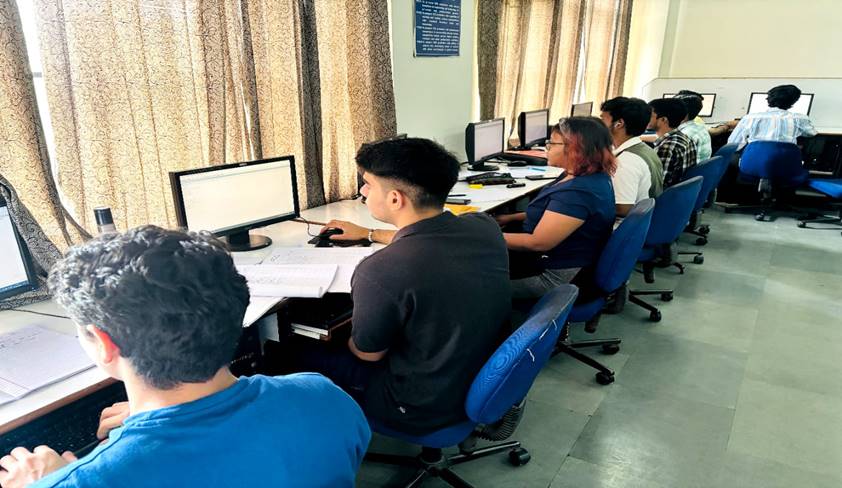
LAB# 204: Probability, Statistics and Linear Programming Lab/ Statistics, Statistical Modelling & Data Analytics Lab / Machine Learning and Data Analytics Frameworks Lab/ Microelectronics Lab
Total Number of Systems: 20 (07 Dell + 13 Acer)
Systems Configuration:- 07 DELL
- Processor- Intel core i 7 CPU , 512GB HDD
- RAM - 16 GB
- Operating System – Window 10 (Licensed)
Systems Configuration:- 13 ACER
- Processor- Intel Core i5 CPU, 500 GB HDD
- RAM - 4GB
- Operating System – Window 10 (Licensed)
Subjects Taught:
- Probability ,Statistics and Linear Programming Lab (BS-252)
- Statistics, Statistical Modelling & Data Analytics Lab (DA-304P)
- Machine Learning and Data Analytics Frameworks Lab (ML-469P)
- Microelectronics Lab (ECC-353)
Software Installed:-
- Scilab
- R Studio
- Tanner Tools
In the Data Analytics Lab , R is used for Statistical, Inference Data, Analysis , Machine learning algorithm .
In the PSLP Lab, Scilab is used To understand probability and probability distributions. Summarization of data, use test of hypothesis, solving linear programming problems.
In the Microelectronics Lab, Tanner Tool is used to design & simulation of VLSI circuits.
LAB# 202 : Probability Statistics and Linear Programming Lab/ Data Analytics Lab/Digital Signal Processing Lab / Signal & System Lab
Total Number Of System : 22 (06 Dell + 13 Acer + 02 Wipro + 01 Assembled)
System Configuration :- 06 DELL
- Processor- Intel core i7 CPU , 512 GB HDD
- RAM - 16 GB
- Operating System – Window 10 (Licensed)
System Configuration :- 13 ACER
- Processor- Intel Core i5 CPU ,500 GB HDD
- RAM - 4GB
- Operating System – Window 10 (Licensed)
System Configuration :- 02 WIPRO
- Intel ( R) Duo CPU 2.93 GHZ
- RAM – 2GB
System Configuration :- 01 Assembled
- Matlab Server
Subjects Taught:
- Probability ,Statistics and Linear Programming Lab
- Data Analytics Lab
- Digital Signal Processing Lab
- Signal & System Lab
Software Installed :-
- Scilab
- R Studio
- Matlab 7.0 (Licensed)
In the Data Analytics Lab , R is used for Statistical, Inference Data, Analysis , Machine learning algorithm .
In the PSLP Lab , To understand probability and probability distributions. Summarization of data, use test of hypothesis, solving linear programming problems.
Lab#210: Analog Communication Lab / Digital Communication Lab / Control Systems Lab / Pattern Recognition Lab
Total No. of Dell Systems: 05
System Configuration:
- Processors: 12th Gen Intel( R)Core(TM ) I7-12700 ,2.10GHz
- RAM :8.00GB (7.70 GB usable)
- Operating System : Windows 11, 64-bit operating system
Total No. of Acer Systems: 05
- Processors: Intel( R)Core(TM ) i-53330S CPU @2.70GHz
- RAM : 4.00GB93.33 GB )
- Operating System : Windows 7, 32-bit operating system
Subjects Taught :
- Analog Communication Lab(ECC-255)
- Digital Communication Lab(ECC-258)
- Control Systems Lab(ECC-355)
- Pattern Recognition Lab(ECE-405 P)
Software Used:
MATLAB
List of Equipments:
- DSO (Digital storage oscilloscope) 100 MHZ,2Gs /s,40MHZ.500GS/s
- Mixed Domain oscilloscope 100MHZ, 2.5GS/s
- AM kits
- FM kits
- Data formatting kits
- Function Generators
- Data Generators
Lab #213: Analog Electronics I & II Lab / Electronics I & II Lab /opoc Lab
Total Number of Hardware :10
Hardware Configuration:
|
S. No |
Name of Equipment |
Make |
Quantity |
|
1 |
DSO 100MHz |
Silicon Elec. Dual Ch. |
10 |
|
2 |
Analog Trainer Kit(AL-303) |
Vinytics |
10 |
|
3 |
Function Generator (4061) 10MHz |
Silicon Elec. Dual Ch. |
10 |
|
4 |
Power supply RPS-2301M |
Vinytics |
2 |
|
5 |
Multimeter (SM7023) |
Scientific |
10 |
|
6 |
HP LaserJet Printer 1020 |
HP |
01 |
|
7 |
Computer P-IV |
HP |
01 |
|
8 |
Bread board |
Crown Electronics |
02 |
|
9 |
Bread board |
Silicon Elec |
10 |
|
10 |
Computer i7 * |
Dell |
10 Issued 9 system in 218,214 |
SubjectsTaught:
- Analog Electronics I & II Lab
- Electronics I & II Lab
SoftwareInstalled:
- Proteus 7.7
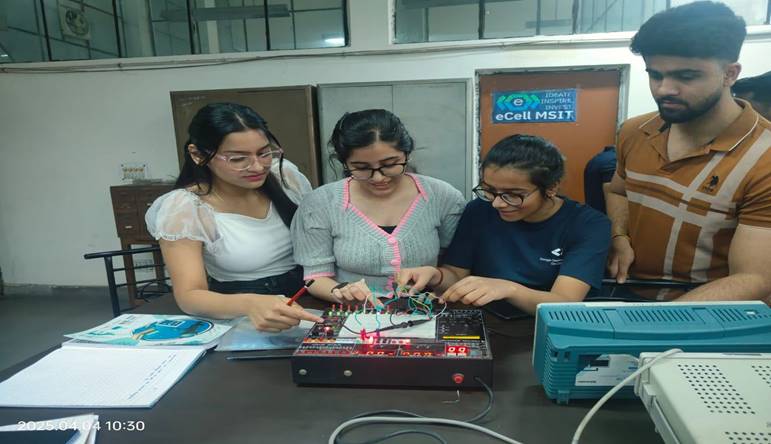
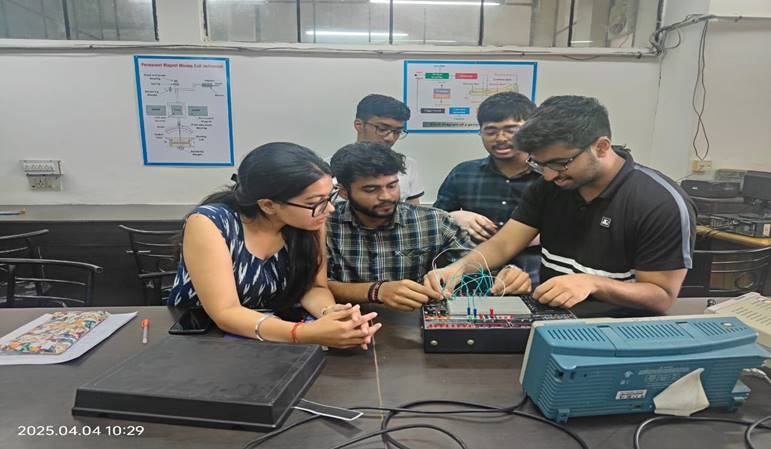
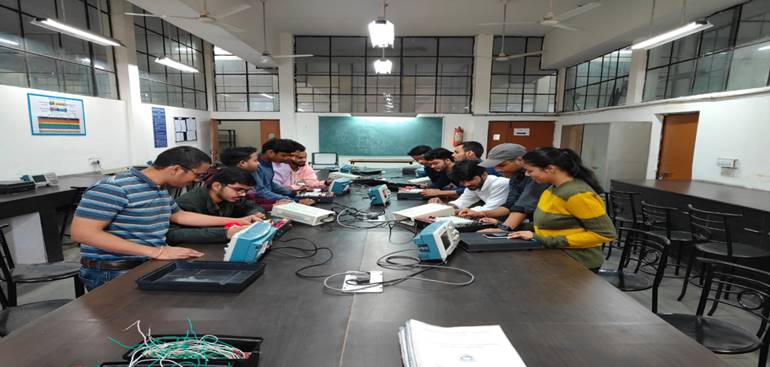
In the Analog Electronics I & II Lab / Electronics I & II Lab, the students use mainly hardware to perform experiments prescribed by university.
OPOC Lab :-
Advance fiber optics trainer kit 07
Power Meter 02
D.S.O. (dual channel 40 Mhz ) 04
Lab #214: Machine Learning Lab / Microprocessor & Microcontroller Lab /
DLCD Lab / Unsupervised Learning Lab / NIBOT Lab
Total Number of Systems: 15
System Configuration & Lab equipments:
∙ Processor: – 13th Gen Intel(R) Core(TM) i7-12700 2.10 GHz 16 GB RAM, 500 GB HDD∙ Operating system: – Window 10 (License) 64 bits - Total 13 System
∙ Processor: – Intel Core I5 3.0 GHz 4 GB RAM, 1 TB HDD∙ Operating system: – Window 10 (License) 64 bits - Total 01 System
∙ Processor: – Intel Core 2.93 GHz 4 GB RAM, 500 GB HDD∙ Operating system: – Window 10 (License) 64 bits - Total 01 System
∙ HP Printer – Total 1
∙ Digital Trainer Kits – Total : 20 (DLCD Lab)
∙ Microprocessor Kits – Total : 32 (8085 Kits-15, 8086 Kits-17) (MPMC Lab)
∙ Interface Cards
Subjects Taught:
∙ Machine Learning.
∙ Microprocessor & Microcontroller.
∙ Digital Logic & Computer Design
∙ Unsupervised Learning
∙ Nature Inspired Biological Optimization Techniques Lab
Software Installed:
∙ Python Language (Version 3.8)
∙ Jupiter 3.1 Notebook, Anaconda 3
∙ 8085 Simulator (Jubin mitra)
∙ EMU8086 (Microprocessor Emulator V 4.08)
∙ MCU 8051 IDE v1.4.9 (An open source IDE for mcs-51 based microcontrollers for POSIX Systems.
In the ML Lab, the students use Python due to extensive library ecosystem, robust visualization capabilities, low barrier to entry, strong community support, flexibility, readability, and platform independence make it an ideal choice for machine learning purposes. The objective of this Lab is to make use of Data sets in implementing the machine learning algorithms, Implement the machine learning concepts and algorithms in any suitable language of choice
In DLCD lab, students will be able to design and analyze the combinational and sequential circuits and execute the assembly language program for 8085 and 8086 Microprocessor.
In NIBOT Lab we introduces students to foundational concepts and practical implementations in machine learning and artificial intelligence. The experiments start with basic linear and multiple regression models, followed by exploring relationships between variables through correlation plots. Students then progress to building and training perceptrons and artificial neural networks with and without backpropagation. The lab also covers optimization problems like the Travelling Salesperson Problem using genetic algorithms, and fundamental learning rules such as Hebb’s Rule. Additionally, students will implement clustering (crisp partitions) on real-life datasets like Iris and simulate basic logic gates. These exercises provide hands-on experience with core AI techniques and prepare students for more advanced projects.
A microprocessor and microcontroller lab provides hands-on experience with these fundamental computing components, supplementing theoretical knowledge with practical application. The lab aims to develop programming skills, demonstrate interfacing techniques, and explore diverse applications of microprocessors and microcontrollers in embedded systems. Students learn to program in assembly language, interface with I/O devices, and design circuits for various applications.
Lab#218: Artificial Intelligence Lab / Antenna Design & Radiating Systems Lab/Transmission line and Waveguide Analysis Lab/Supervised and deep learning lab
Total No. of systems: 22
System Configuration: 10 DEL
- Processor:-12th Gen intel ® Core™ i7-12700 2.10 GHz
- RAM :8GB
- Operating System: Windows 10; 64 bit operating system, x64 based processor
System configuration :10 DEL
- Processor:-13th Gen intel ® Core™ i7-13700 2.10 GHz
- RAM :16GB
- Operating System: Windows 10; 64 bit operating system, x64 based processor
Total No. of HP systems: 02
System Configuration:
- Processor:- Intel® Core™2 Duo CPU E7500 @ 2.93GHz
- RAM :4GB (3.44 GB usable)
- Operating System: Windows 7; 32 bit operating system
Subjects Taught:
- Artificial Intelligence (ECE 318P)
- Antenna Design & Radiating Systems Lab (ECE 330P)
- Transmission line and Waveguide Analysis Lab (ECC-357
- Supervised and deep learning lab (ML-463P)
Software used:
- SWI Prolog / CST Studio Suite
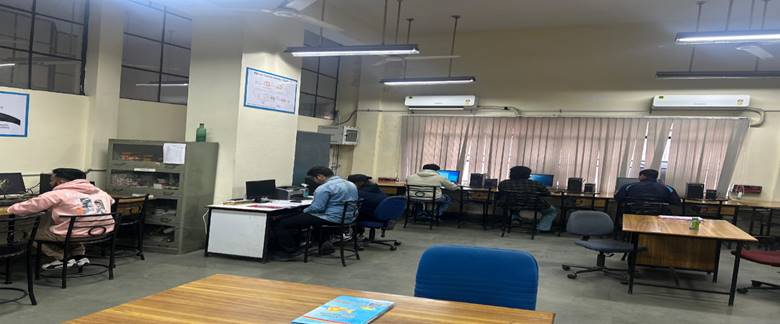
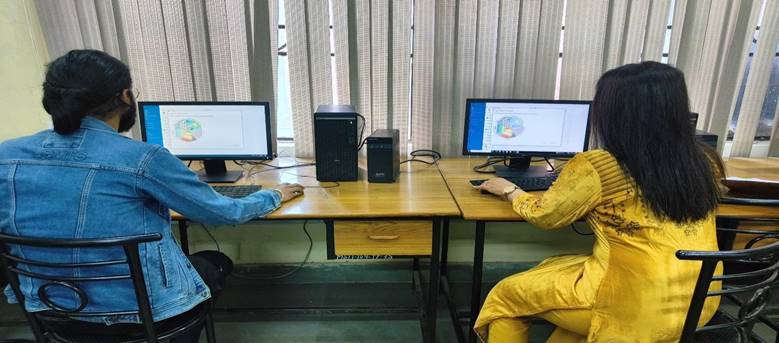
In the AI Lab, the students use SWI Prolog Programming software to perform experiments based on artificial intelligence. Students are encouraged to start from basic to advanced programming.
In the AD&RS Lab, the students use CST Studio Suite software to perform experiments based on AD&RS. Students are encouraged to start from basic to advanced antenna designing and simulation.
In the TWA Lab, the students use CST Studio Suite software to perform experiments based on TWA. Students are encouraged to make project using the software.
LAB# 216: Project Lab
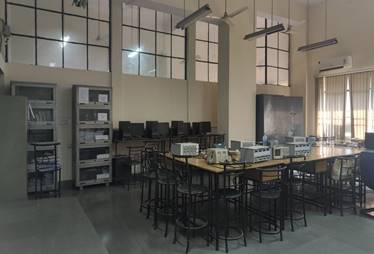
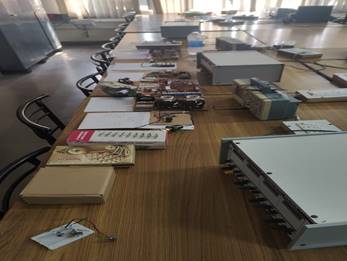
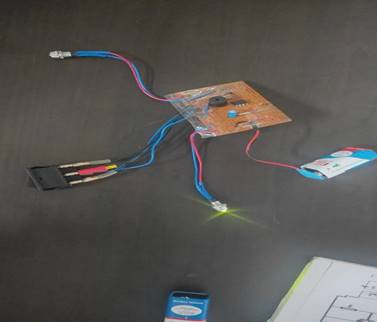
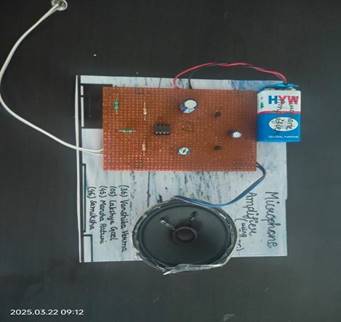
The department offers an exclusive project laboratory, fully equipped with state-of-the-art hardware and software resources. These facilities are designed to support students in completing their project work. Additionally, students are encouraged to utilize other laboratories for their project-related tasks when necessary.
Total Number of System: 09 (05 Dell +3 Acer+1 HP)
System Configuration: - 04 DELL
Processor- Intel core i7 CPU , 512 GB HDD, RAM - 16 GB, Operating System – Window 10 (Licensed)
System Configuration: - 01 DELL
INTEL CORE I5-7400CPU @3GHZ
System Configuration: - 03 ACER
Core i5, 2nd Gen, 4GB DDR3 RAM, 500GB HDD
System Configuration: - 01 HP
DUO,[email protected] RAM 4GB
Software Installed:-
- Scilab
- R Studio
- Matlab
- Python/Jupiter
- Python Language (Version 3.8)
- Jupiter 3.1 Notebook, Anaconda 3
- 8085 Simulator (Jubin mitra)
- EMU8086 (Microprocessor Emulator V 4.08)
- MCU 8051 IDE v1.4.9 (An open source IDE for mcs-51 based microcontrollers for POSIX Systems.
Hardware Equipment’s /Components available:
|
Power Supplies |
4 |
|
DSO |
4 |
|
Screw Driver 911 |
2 |
|
Disordering Pump |
5 |
|
Stripper Wire & Cutter |
4 |
|
Self Adjusting cutter /wire stripper |
1 |
|
Screw driver 6 inch |
2 |
|
Long Nose Pliers (PYE) |
2 |
|
Iron Stand |
5 |
|
Screw Driver 824 |
4 |
|
Screw Driver 825 |
5 |
|
Digital Multimeter DT 9205A |
6 |
|
Transformer 606 Delton |
10 |
|
File Flat 6” |
8 |
|
Battery 9 volt |
3 |
|
Tweezers |
9 |
|
Screw Driver 932 |
2 |
|
|
|
|
|
|
|
|
|
Dear Students,
Please find below the guide for accessing the course materials. Kindly refer to the respective links provided for the following resources:
- Syllabus
- Lesson Plan
- Sample Assignment
- Sample Quiz
- Previous Year Question Papers
- Question Bank
These materials will help you stay aligned with the course requirements and prepare effectively for your assessments.
3rd Sem: https://drive.google.com/
4th Sem: https://drive.google.com/drive/folders/1nHop-n2y5_9x5ngrhps_FpwumH30cc6x
5th Sem: https://drive.google.com/
6th Sem: https://drive.google.com/
7th Sem: https://drive.google.com/
8th Sem: https://drive.google.com/

|
Dr. Sudesh Pahal DR. SUDESH PAHAL Vidwan Id- 243358 |

|
Dr. Archana Balyan B. E. in Electronics Engineering from Bangalore University in 1991 , M.E. (ECE) from Delhi Technological University (Erstwhile Delhi College of Engineering) in 2002 and Ph.D. from Guru Gobind Singh Indraprastha University , Delhi in the field of Computer Science and Engineering in 2016. Presently working as Director, Maharaja Surajmal Institute of Technology. She has published more than 50 research papers in various journals and conferences. She has published 2 patents also. She has guided several B.Tech students. She is life member of ISTE. She is reviewer of various reputed journals. She had been “Organizing chair” to organize various national and international conferences and convenor of faculty development programs. She had also been reviewer and session chair for many conferences. She has also won research excellence awards and best paper research award. Her current area of interest is Electronic Devices and circuits, Speech synthesis, Human – machine interaction, AI in health sector & other applications. She is having more than 32 year’s academic experience. She is having long administrative experience.
Vidwan Id- 243344 |

|
Dr. Pardeep Sangwan He has done his M. Tech from NIT, Kurukshetra and Ph. D from UTU, Dehradun. He has been associated with MSIT since 2004 and currently holds the post of Associate Professor and heading Department of ECE 2nd shift. He is a Life Member of the Indian Society for Technical Education (ISTE). He has published several SCI/SCIE research publications in reputed international journals. He has supervised one Ph. D thesis and over 40 UG thesis. His research interest include Speech Processing, Renewable Energy, Machine Learning and Artificial Intelligence. Vidwan ID: 243293 |

|
Dr. Puneet Azad Dr. Puneet Azad works in the field of energy harvesting and designing electronic circuits for power optimization suitable for sensors. He is actively involved to obtain sustainable energy solutions with main focus on materials engineering and designing energy efficient circuits. His aim is to demonstrate proof of concepts based on above mentioned concepts. He has published research papers in several reputed International Journals. He has significantly contributed as Convener of various committees of our Institute. Vidwan Id- 180272 |

|
Dr. Neeru Rathi Dr. Neeru Rathee is a motivated and talented ECE professor driven to inspire students to pursue academic and personal excellence. She consistently strives to create challenging and continuous learning environment for herself and for her students to become a lifelong self-learner. She is having exceptional track record of research (in signal processing, image processing and artificial intelligence) success with multiple published articles in reputed journals and conferences and is working on research projects. Apart from academics and research, she has an experience of working in ECell, NISP, Institute Journal, Innovation Cell, Library Committee, NBA and various activities conducted time to time. Her hard work and dedication are reflected by the awards she has received as Best Faculty Award, Research Excellence Award, Mentorship Award, Best Paper Presentation Award and Best Poster Presentation Award. Vidwan Id- 243360 |

|
Dr. Meena Rao Dr. Meena Rao PROFESSIONAL SUMMARY Vidwan Id- 243414 |

|
Dr. Shafali Madan Arora Dr Shaifali M. Arora has special interest in the field of Signal, Image and Video Processing, Image Watermarking, Embedded Systems, IoT and Machine Learning Techniques. These paradigms offer immense opportunities in transforming healthcare, marketing, finance, and business. She has published one patent, various research papers in reputed Journals and International Conferences, Books , Book Chapters in these domains. She has successfully guided one Ph.D scholar as a co-guide in the domain of Image Watermarking. She is a committed person with a positive attitude, desired skills and always keen to learn new techniques/technologies. Dr Shaifali has always remained a meritorious student and got many awards. She has got the Research Excellence award and various Appreciation Awards at our Institute. She has always completed the assigned tasks and responsibilities (whether as a team member or as a Convener) with sheer dedication and responsibility. Vidwan Id- 243368 |

|
Dr. Richa Gupta Dr. Richa Gupta ’s research areas include antenna design , Embedded Systems design . She has published several research papers in these domains. She has taught various subjects like Electromagnetic Field theory, Microprocessors & microcontrollers, Analog Electronics, Circuit & Systems etc. during her teaching career. Vidwan Id- 243479 |

|
Dr. Aman Kumari Dahiya Dr. Aman Kumari Dahiya is currently serving as an Associate Professor and Associate Dean Infrastructure at the Institute and has been associated with MSIT since September 2009. She holds B.E. and M.Tech. degrees in Electronics and Communication Engineering, both with distinction, an M.B.A. in Finance and a Ph.D. in Microwave Engineering. Her research interests include Artificial Intelligence, Microwave and Millimeter-Wave Devices, Antenna Design and IoT. Dr. Aman has published 50+ research papers, including 09 SCIE- and 07 Scopus-indexed papers, and has five patents to her credit. She has also authored books and book chapters with national and international publishers and served as a Guest Editor/Editor for SCIE- and Scopus-indexed Springer journals. She has contributed to an IEEE MTT-S-sponsored research project on “Reconfigurable Antenna Design for Wireless Communication Devices.” She has undertaken several academic and institutional responsibilities, including Faculty Representative (2020–2022) on the Governing Body of MSIT, Co-Convener of the 7th National Conference AdMet-2021 and Environmental Fest ENVA-2020, Convener of Tech Fest AVENSIS-2025, and Department Labs Coordinator, among other responsibilities. With her strong academic background, research expertise, administrative experience, and student-centric approach, Dr. Aman continues to contribute significantly to teaching, research, innovation, infrastructure development, and institutional excellence. Vidwan Id- 243365 |

|
Dr. Dinesh Sheoran Dinesh Sheoran (Ph.D. Uttarakhand Technical University, Dehradun) is an Assistant Professor at Maharaja Surajmal Institute of Technology New Delhi. His research interests include biometric and speaker recognition, voice recognition and waste management. He taught subjects like Communication System, Digital Communication, VLSI, Digital Electronics, STLD, and Consumer Electronics.Before joining the faculty at Maharaja Surajmal Institute of Technology, He served at different levels in the electrical and electronics industry. Vidwan Id- 243571 |

|
Mr. Deepak Goyal Analog & Digital Electronics Application through transistors & Microcontrollers. Vidwan Id- 243474 |

|
Dr. Deepti Deshwal Dr. Deepti Deshwal is working in this institute since 2007. She has taught various subjects in her teaching career such as Digital System Design, EMFT, Antenna and Wave Propagation, Communication Systems, Digital Signal Processing, Wireless Communication, Electronic devices and Consumer Electronics. She works on signal processing and machine learning aspects, targeted to mainly speech applications. Her research interests are (i) Automatic Language Identification Systems, Speaker and Speech Recognition Systems (ii) development of robust speech systems, iii) development of appropriate signal processing methods to extract the characteristic features from Indian languages. Dr. Deepti has authored 6 research papers in SCI indexed journals and also contributed papers in various IEEE and Scopus indexed conferences. She has been awarded Research Excellence certificate for outstanding contribution in research in the year 2019. Vidwan Id- 243367 |

|
Ms. Neelam Nehra Ms. Neelam Nehra works in the field of speech processing. She has 13 years of teaching experience and has taught various subjects as Analog Electronics-II, Information theory and Coding, Electronic Devices, Circuit, and Systems. She is an ISTE member. She is actively involved in Social media activities related to the institute. She has supervised more than 20 B.Tech projects in the field of Machine learning, Deep Learning, and Embedded systems. Vidwan Id- 243504 |

|
Dr. Geetanjali Sharma Ms. Geetanjali Sharma works in the field of Biomedical signal processing, Smart healthcare, and Low power VLSI Systems. She has 14 years of teaching experience and has taught various subjects as VlSI Design, Optical Communication, Digital Signal processing, Electronic Devices and Communication Systems. She has published more than 20 research papers in international peer reviewed journals and International conferences. She is an IEEE and ISTE member. She is actively involved in Industry Institute Interaction activities organised for B.Tech Students. She has supervised more than 20 B.Tech projects in the field of VLSI Design, Artificial intelligence and Embedded systems. Vidwan Id- 243363 |

|
Dr. Sakshi Rajput Dr. Sakshi Rajput works in the multidisciplinary area of VLSI and Mobility Management (wireless communication). She has cleared Gate exam in ECE also. She has 10 years of teaching experience and has taught VLSI Design (Analog & Digital), Electronics Instrumentation & Measurement, Digital Electronics, STLD, Embedded System, Analog Electronics in the department of ECE. She has published research papers in several International Journals. She is actively involved to obtain solutions to the problem related to wireless communication between devices with the help of self organizing network, deep neural networking & artificial intelligence. She has always remained a meritorious student and always completed assigned tasks and responsibilities with complete dedication. She is also actively involved in various institutional & departmental activities. She has supervised more than 20 B.Tech projects in the field of VLSI Design & Embedded System. Vidwan Id- 243483 |

|
Dr. Nishtha Ms. Nishtha works in the field of Antenna and Microwave Engineering. Her main areas of research are Antenna for 5G Applications using Dielectric resonator antennas or Graphene antennas. She is working actively to obtain solutions focusing on low-cost, high gain MIMO antennas for futuristic communication. Her main aim is to explore new materials and fabrication techniques in CP and MIMO antennas She has cleared the UGC-NET exam in electronic sciences. Vidwan Id- 243427 |

|
Dr. Neetu Dr. Neetu Vidwan ID: 243421 |

|
Dr. Upma Singh Dr. Upma Singh has been working in this Institute since 2013. She fulfills all his duties of teaching, administration and research with keen interest. She has taught several courses to B.Tech students such as Optical Communication, Control Systems, Communication Systems, Digital Communication, Electronic Devices, Mobile Communication, Adhoc and Sensor Networks, and Telecommunication Networks. |

|
Ms. Jasmine Chhikara Jasmine Chhikara is an Assistant Professor with expertise in Artificial Intelligence, Biomedical Engineering, and Embedded Systems, with a particular research focus on deep learning and medical image analysis for pancreatic cancer diagnosis. Her research integrates advanced AI techniques such as transfer learning and optimization-based deep learning to address challenges in medical image classification and computer-aided diagnosis. She is also actively involved in teaching and research in Microelectronics, Analog Electronics, Microprocessors, Microcontrollers, and Embedded Systems, bringing together interdisciplinary knowledge of AI and engineering. Her research work has received Research Excellence and Best Paper Awards. Vidwan ID: 248676 |

|
Ms. Prinkle Talan |

|
Ms. Garima Dr. Garima Vidwan ID: 243384 |

|
Ms. Vishakha Tomar Ms. Vishakha Tomar works in the field of Antenna and Microwave Engineering and is actively involved in the designing of Substrate Integrated Waveguide Antenna for 5g Applications which is an emerging approach for the implementation and integration of microwave and millimeter-wave components and wireless systems. She is working actively to obtain solutions focusing on low-cost and eco-friendly wireless systems. Her main aim is to work on innovative materials and fabrication techniques along with a variety of novel applications. Vidwan Id- 243453
|

|
Dr. Suman Lata Dr. Suman Lata has been working as an Assistant Professor in the Department of Electronics and Communication Engineering (ECE) at Maharaja Surajmal Institute of Technology (MSIT), Janakpuri, New Delhi, with approximately 15 years of teaching experience. She is deeply committed to academic excellence across teaching, administration, and research. She has taught various courses to B.Tech students, including Analog Communication, Communication Systems, Data Communication & Networking, Control Systems, Microprocessor and microcontrollers, Embedded Systems, Digital Electronics and Computer Organization. Her research focuses on speech sentiment recognition and deep learning methodologies, highlighted by publications in many international and Scopus-indexed journals. Her areas of interest include Artificial Intelligence, Machine Learning, Deep learning, Speech Recognition, Sentiment Analysis, Embedded System, IOT & Remote Monitoring, Industrial Automation, medical monitoring. |

|
Ms. Anjali Balyan Ms. Anjali Baliyan has been actively involved in teaching and research in the areas of antenna engineering, VLSI design, and 5G communication systems. Her research focuses on MIMO, UWB, circular polarization, and fractal geometries, with an emphasis on improving bandwidth, isolation, and diversity performance. She employs simulation and verification tools including CST, ANSYS HFSS, Xilinx ISE, and ModelSim. With multiple 2025 Scopus-indexed publications in 5G mm-wave antenna systems, she bridges theoretical electromagnetics with practical antenna fabrication and system-level wireless integration. Her areas of interest include 5G/mm-wave antenna design, MIMO antennas, UWB systems, circularly polarized antennas, fractal geometries, VLSI design, electromagnetic modelling, and wireless communication systems. She is also committed to student mentorship, hands-on workshops, and connecting academic concepts with industrial applications Vidwan ID: 243318 |

|
Dr. Neelam Barak Dr. Neelam Barak has been serving as an Assistant Professor in the Department of Electronics & Communication Engineering since August 2021. She has over 5+ years of experience in teaching, experimental research, laboratory development, and interdisciplinary instrumentation. Her research expertise spans optical instrumentation, digital holographic microscopy, optical metrology, imaging systems, sensing and signal processing, robotics, and automation. She has published 20+ research articles in reputed journals and conferences and has an h-index of 7. |

|
Ms. Himani Ms Himani’s research areas include Wireless communication, Artificial intelligence. She has taught various subjects like Switching theory and logic design, Communication systems, Digital communication, Microprocessors & microcontrollers, during her teaching career. Currently working on Speech processing domain and Machine learning. Vidwan ID - 243352 |

|
Ms. Sonia Ms. Sonia has been working in this Institute since 2022. She fulfils all his duties of teaching, administration and research with keen interest. She has taught several courses to B.Tech students such as Analog Electronics, Artificial Intelligence, Microprocessor and Microcontroller, Supervised Learning, Digital Signal Processing etc. Vidwan Id: 282015 |

|
Ms. Neha I have done my B.Tech from Northern India Engineering College(GGSIPU) in 2013 intheECE branch and my M.Tech from the University School of Information, Communication, and Technology(GGSIPU) in 2017 in the ECE branch. I have a total work experience of about one and a half years. During which I taught various subjects like Electronic Devices and circuits, communication systems, wireless communication, Digital system design, Digital signal processing, etc. I worked on tanner and Xilinx ISE for VLSI design. Also worked on MATLAB for projects related to VANET (vehicular ad-hoc network). Some work is also done in the field ofmicrowave and antenna using HFSS software. Vidwan Id - 282124 |
| S.No. | Name of the Staff Member | Designation |
| 1 | Ms. Pratibha | Tech. Assistant |
| 2 | Sh. Gurdev Singh | Tech. Assistant |
| 3 | Sh. Nitin Rathi | Tech. Assistant |
| 4 | Sh. Pramesh Kumar | Tech. Assistant |
| 5 | Sh. Padam Chand | Tech. Assistant |
| 6 | Sh. Satendra Singh | Tech. Assistant |
| 7 | Sh. Amit Wadhwa | Tech. Assistant |